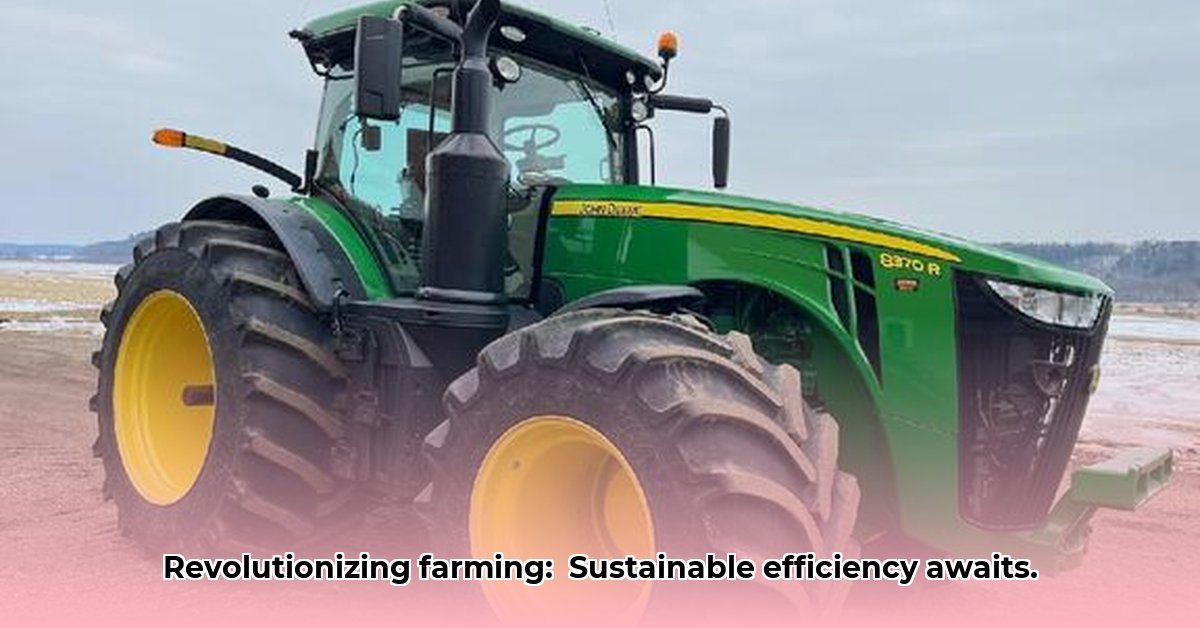
Feeding a growing global population while protecting our planet requires a fundamental shift in agricultural practices. Modern tractors are not simply powerful machines; they are crucial tools in achieving sustainable agriculture. This article explores the technological advancements driving modern tractor design, their role in enhancing farm efficiency, and the ongoing efforts to minimize their environmental impact. We'll examine how these innovations contribute to a more sustainable and food-secure future. For more information on specific tractor brands, check out this New Holland tractor review.
Tractor Technology: A Revolution in Sustainable Farming
The evolution of the tractor mirrors the evolution of agriculture itself. Early models, often cumbersome and inefficient, have given way to sophisticated, technologically advanced machines. This transformation enhances not only productivity but also environmental sustainability through precision agriculture and reduced resource waste.
A Brief History of Tractor Innovation
From steam-powered behemoths to today's GPS-guided marvels, the tractor's journey reflects continuous innovation. Early tractors, while revolutionary for their time, lacked the efficiency and precision of modern designs. The development of the internal combustion engine, coupled with advancements in materials science and electronics, has transformed the tractor into a multi-functional, high-precision farming tool.
Modern Tractor Types and Capabilities
The modern agricultural landscape boasts a diverse range of tractors, each designed to meet specific farming needs. Compact tractors serve small-scale operations, while larger, more powerful models are suited for large-scale farms. Furthermore, fuel types are diversifying, with diesel still predominant but facing growing competition from biodiesel and the increasingly promising emergence of electric tractors. This diversity ensures accessibility and adaptability across diverse farming contexts. Could the rise of alternative fuels significantly impact the environmental footprint of modern agriculture?
The Power of Precision Agriculture
Modern tractors leverage GPS technology, auto-steering, and variable rate technology to optimize resource utilization. GPS-guided systems ensure precise application of fertilizers, pesticides, and seeds, minimizing waste and maximizing yield. Auto-steering reduces overlaps, saving fuel and time, while variable rate technology adjusts input application based on the specific needs of each area within a field, further optimizing resource allocation. How has the adoption of precision agriculture technologies impacted the overall sustainability of farming practices?
Sustainability Challenges and Solutions
While modern tractors offer significant advantages, their environmental impact remains a critical concern. Manufacturing tractors requires substantial resources, and their operation relies on fuel, contributing to greenhouse gas emissions. However, the industry is actively working to address these challenges. Manufacturers are focusing on fuel-efficient engines, integrating recycled materials into tractor construction, and developing responsible disposal practices. Research is also exploring alternative fuels and advanced engine technologies to reduce emissions. What are the most promising strategies for further minimizing the environmental impact of tractor production and operation?
Addressing Challenges and Opportunities for Small-Scale Farmers
The high cost of advanced tractors presents a significant hurdle for many small-scale farmers. However, initiatives like government subsidies and collaborative farming arrangements, where farmers share equipment and resources, are helping to overcome this barrier. Expanding access to these technologies through such programs is essential for promoting a more equitable and sustainable agricultural system. What innovative solutions are being developed to ensure that the benefits of modern technology are accessible to all farmers, regardless of scale?
The Future of Tractors: Autonomous Systems and Beyond
The horizon for agricultural technology is filled with exciting advancements. Autonomous tractors, guided by artificial intelligence (AI), are poised to revolutionize farming operations. These self-driving machines promise to further enhance efficiency, reduce labor costs, and optimize resource management. AI-powered systems will analyze vast amounts of data to refine farming practices, contributing to greater precision and sustainability. What are the potential long-term implications of these emerging technologies for food security and environmental protection?
Fuel Efficiency in Modern Tractors: A Data-Driven Perspective
The following table provides illustrative data on fuel consumption. Actual fuel efficiency varies considerably based on tractor model, terrain, and farming practices. These values serve as estimates, and further research is needed for definitive conclusions.
| Tractor Type | Average Fuel Consumption (liters/hectare) | Notes |
|---|---|---|
| Small, conventional | 15-20 | Older models; typically less efficient |
| Medium, modern | 10-15 | Incorporates some fuel-saving technologies |
| Large, high-tech | 8-12 | Advanced engine technology, precision farming |
(Note: This data is for illustrative purposes only.)
A Roadmap for Sustainable Tractor Practices
Implementing sustainable tractor practices requires a multi-faceted approach:
Prioritize Fuel Efficiency: Invest in fuel-efficient tractor models, considering long-term fuel savings against higher initial costs. This action alone can significantly reduce a farm's carbon footprint.
Maximize Precision Agriculture: Utilize GPS-guided systems and auto-steering features to minimize fuel consumption, fertilizer usage, and other resource inputs. This precision approach leads to major environmental and economic benefits.
Regular Maintenance is Key: Consistent maintenance ensures peak engine performance and fuel optimization. Proactive maintenance can drastically increase efficiency and reduce unnecessary fuel consumption.
Explore Alternative Fuels: Consider biodiesel or other renewable fuels whenever feasible. This choice directly contributes to reduced reliance on fossil fuels.
Responsible Disposal: Proper disposal or recycling of old tractors helps to minimize the environmental impact of their lifecycle. Choosing responsible disposal methods is crucial.
The sustainable use of tractors is a significant step towards a more environmentally responsible agricultural system. Combining responsible tractor practices with holistic, integrated approaches guarantees a sustainable and food-secure future.